
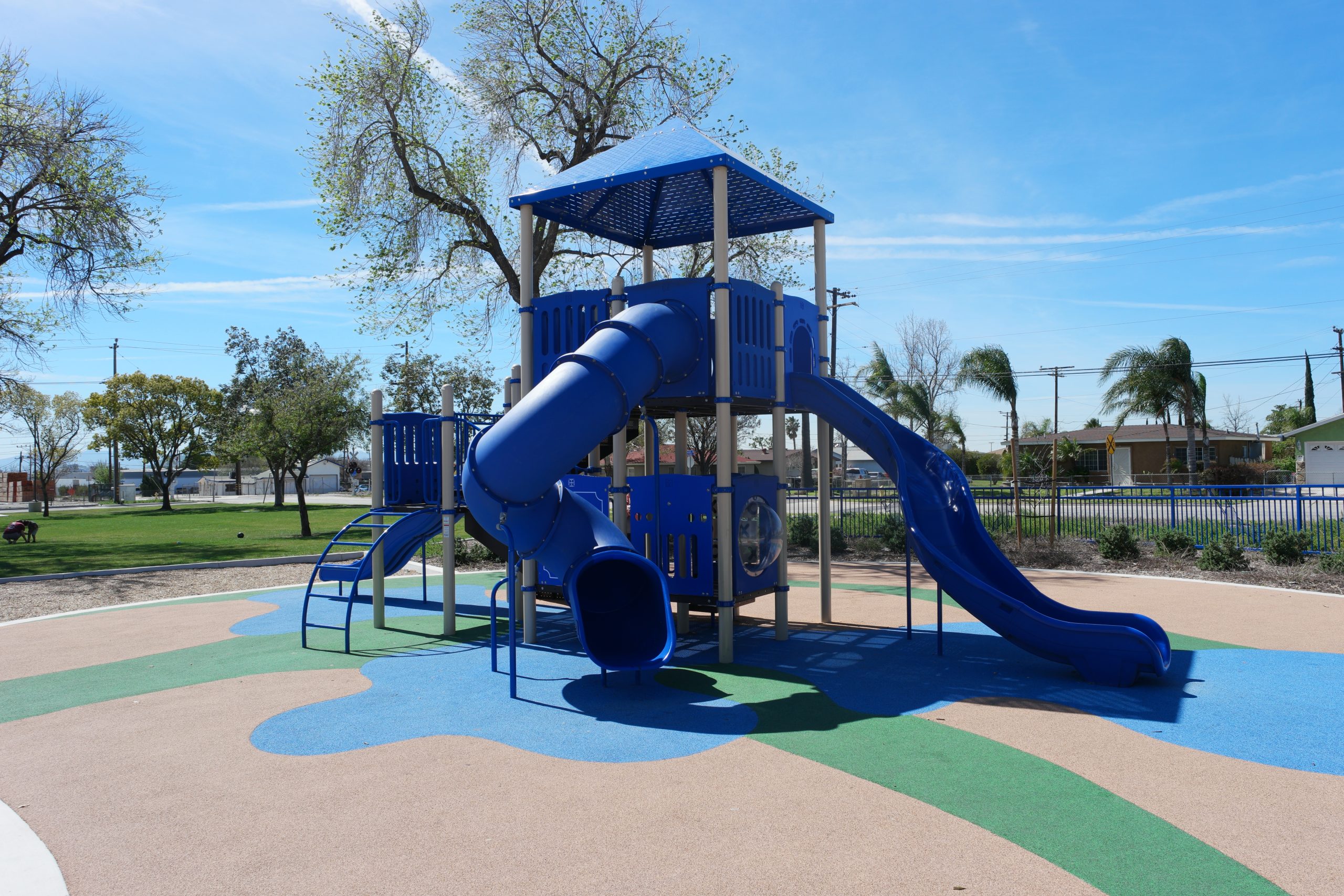
As schools, parks, and family neighborhoods expand, playground planning becomes more important. A growing community needs play spaces that can serve more children, support frequent use, and continue working well as needs change. Choosing equipment based only on appearance can lead to problems later if the layout, materials, or activities do not fit the people using the space.
When you compare commercial playground equipment in Chula Vista, it helps to look beyond individual slides, climbers, and play structures. You need to consider how the entire playground will function each day. Will it handle regular use? Does it serve different ages and abilities? Can it work with the available site and budget? The following five features can help schools, parks, churches, HOAs, and other community organizations make a more informed playground equipment decision.
1. Durable Equipment Built for Frequent Use
Durability should be one of your first considerations when planning a commercial playground. School playgrounds may serve students several times each day. Public parks can experience steady use throughout the week. Equipment in these settings needs to be designed for shared use rather than occasional backyard play.
Look at the materials used throughout the structure. Posts, decks, panels, connectors, climbers, and moving components all need to perform under repeated activity. Protective finishes also matter because outdoor equipment remains exposed to sun, weather, and everyday wear.
Durability is not just about avoiding visible damage. It also affects how practical the playground is to own over time. Equipment that holds up well can reduce the need for frequent replacement of major components.
Consider future maintenance before making your choice. Ask how individual parts can be serviced or replaced when needed. A commercial playground is a long-term community investment, so the equipment should make sense well beyond opening day.
2. Activities That Match Your Age Groups
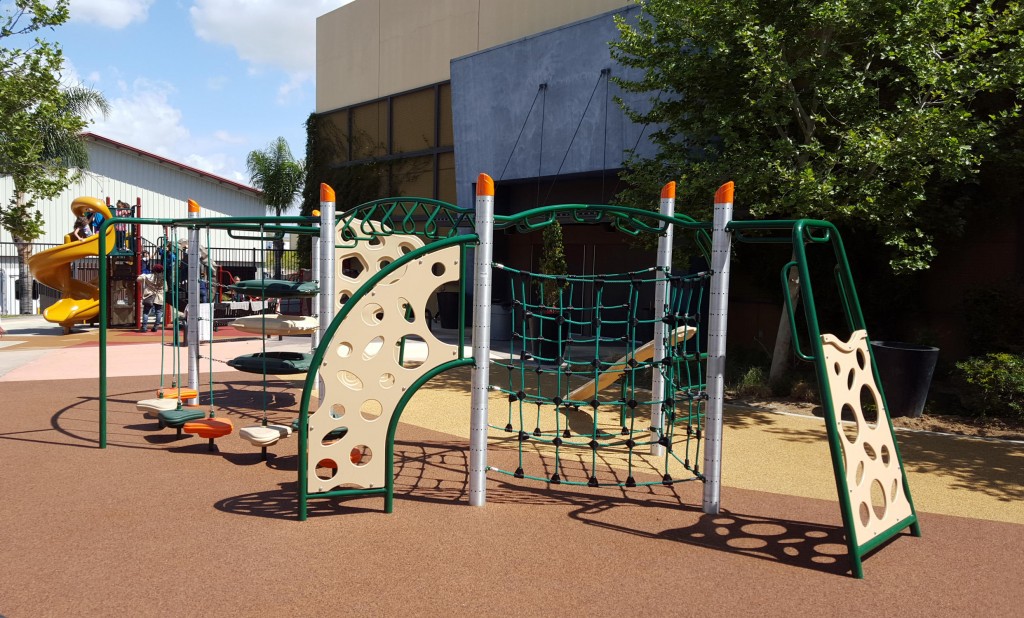
Playground equipment should fit the children who will actually use it. A preschool group does not play the same way as older elementary students. Likewise, a neighborhood park may need to accommodate a wider age range than a school serving specific grade levels.
Start by identifying your primary users. Younger children may need lower, simpler activities with opportunities to develop balance, coordination, and confidence. Older children often look for more challenging climbing, movement, and social play.
Variety also matters within each age group. Not every child wants the same experience. Some enjoy physical challenges. Others prefer imaginative activities, interactive panels, or spaces where they can talk with friends.
A well-planned playground gives children choices without creating a confusing layout. Different activities should complement one another and support natural movement through the play area.
Thinking about age early also helps you use your available space more effectively. Instead of adding equipment simply to fill an empty area, you can select features that provide meaningful play for the children your school or community serves.
3. Inclusive Features That Expand Participation
A successful community playground should give more children meaningful ways to participate. That requires thinking about inclusion from the beginning of the planning process rather than treating it as a final addition.
Physical access is one important consideration. Look at how children enter the play area and move between activities. Surfacing, pathways, transfer points, and equipment placement can all influence how easy the playground is to navigate.
Inclusive play also involves more than mobility. Children engage with playgrounds in different ways. Some want constant movement and physical challenges. Others may enjoy sensory activities, quieter interaction, imaginative play, or social features.
Providing several types of experiences can make the playground useful to a broader group of children. It also gives families and caregivers more choices when visiting the space.
The overall layout should encourage children to play near one another instead of separating accessible activities into isolated areas. When inclusion guides the whole design, an inclusive playground can support greater interaction among children with different abilities and preferences.
4. A Layout Designed Around the Actual Site
Even excellent equipment can perform poorly if it does not fit the property. Before you select a playground structure, take a close look at your available site and how people already use it.
A school may need to work around classrooms, walkways, sports areas, and drop-off zones. A park might have existing landscaping, picnic spaces, restrooms, or paths nearby. Churches, apartments, and HOAs may have smaller or unusually shaped areas available for play.
These conditions should influence the design. You need enough space for equipment, circulation, surfacing, and appropriate areas around individual activities. Entry points should also make sense for the way families and children approach the playground.
Site planning can help you avoid overcrowding. A large structure is not automatically the best use of a property. In some cases, several thoughtfully placed activities can make the area feel more open and provide better play value.
You should also consider sun exposure, existing shade, drainage, and nearby seating. Looking at the entire property before choosing equipment helps create a playground that feels intentional rather than squeezed into whatever space remains.
5. A Project Plan That Accounts for More Than Equipment
Playground equipment is a major part of the project, but it is not the entire project. Buyers should consider all the pieces that need to come together before children can use the finished space.
Surfacing is one of those decisions. Different playground sites may require different approaches based on use, design, accessibility, and budget. Installation, site preparation, freight, and removal of existing equipment may also affect the overall project.
Thinking about these needs early can help you develop a more realistic budget. It can also prevent situations where most of the available funds are committed to equipment before other important project needs have been considered.
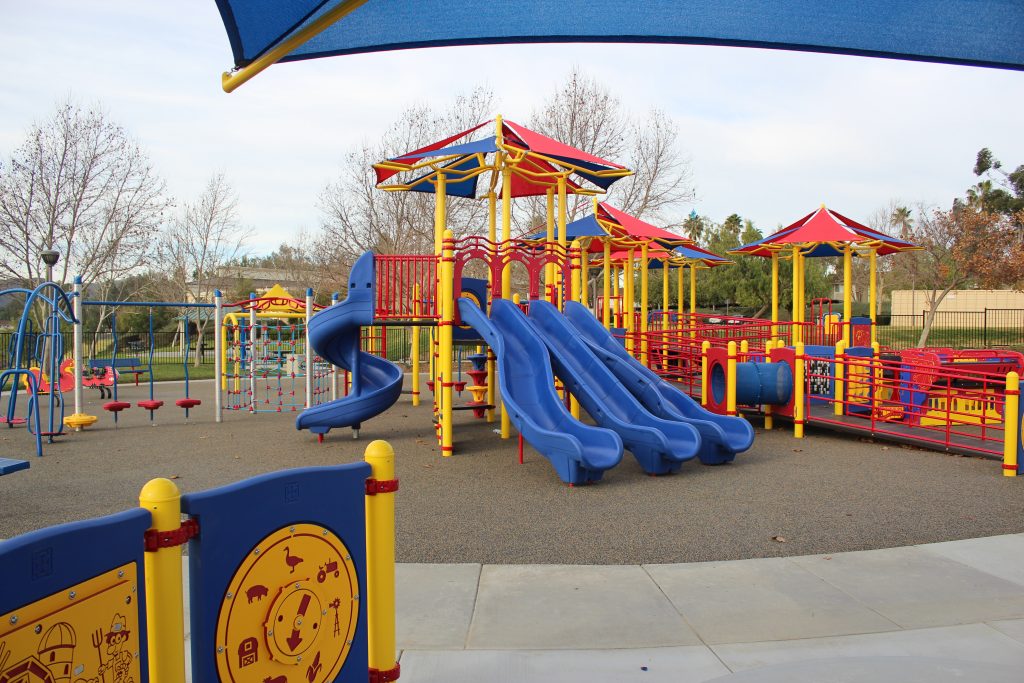
A clear plan helps you prioritize. Decide which activities matter most, which age groups need to be served, and what site improvements may be necessary. Then consider where your budget can provide the greatest value.
You should also think about future use. If a school population or neighborhood is growing, the playground may need enough variety and capacity to remain useful as more children begin using the space.
Planning Commercial Playground Equipment in Chula Vista
Choosing the right playground equipment starts with looking at the complete experience you want to create. Durability helps support frequent use. Age-appropriate activities keep the playground relevant to its users. Inclusive planning gives more children opportunities to participate. Site-specific design makes better use of the property, while thoughtful budgeting keeps equipment, surfacing, and installation connected within one project plan.
If you are planning commercial playground equipment in Chula Vista, Pacific Play Systems can help you bring the project together. We work with schools, parks, churches, HOAs, apartments, and other community spaces throughout Southern California. Our team can help you evaluate your site, select commercial playground equipment, develop a practical design, consider surfacing and shade needs, and coordinate turnkey installation. Contact Pacific Play Systems to start planning a playground that fits your users, property, and project goals.